The name sounds dramatic — but the reality is a well-established skin treatment using your own biology. Here’s what actually happens, and who it’s for.
The name makes it sound more alarming than it is.
A “vampire facial” is the popular informal name for PRP therapy applied to the face — and once you understand what’s actually happening, the dramatic nickname is more marketing than medicine. It’s a well-established treatment used in sports medicine, orthopaedics, and aesthetics.
The “vampire” label comes from the fact that the treatment uses your own blood. A small amount is drawn from your arm, processed, and the concentrated plasma is applied to your face. That’s it. It became “the vampire facial” because it photographs dramatically on social media — and the name stuck.
Clinically, it’s called Platelet-Rich Plasma therapy — PRP for short.
Here’s the process from start to finish at myskiin:
1. Blood draw. A small amount of blood is taken from your arm — a similar amount to a standard blood test. At myskiin, this is carried out by a blood-draw qualified practitioner. It takes a couple of minutes.
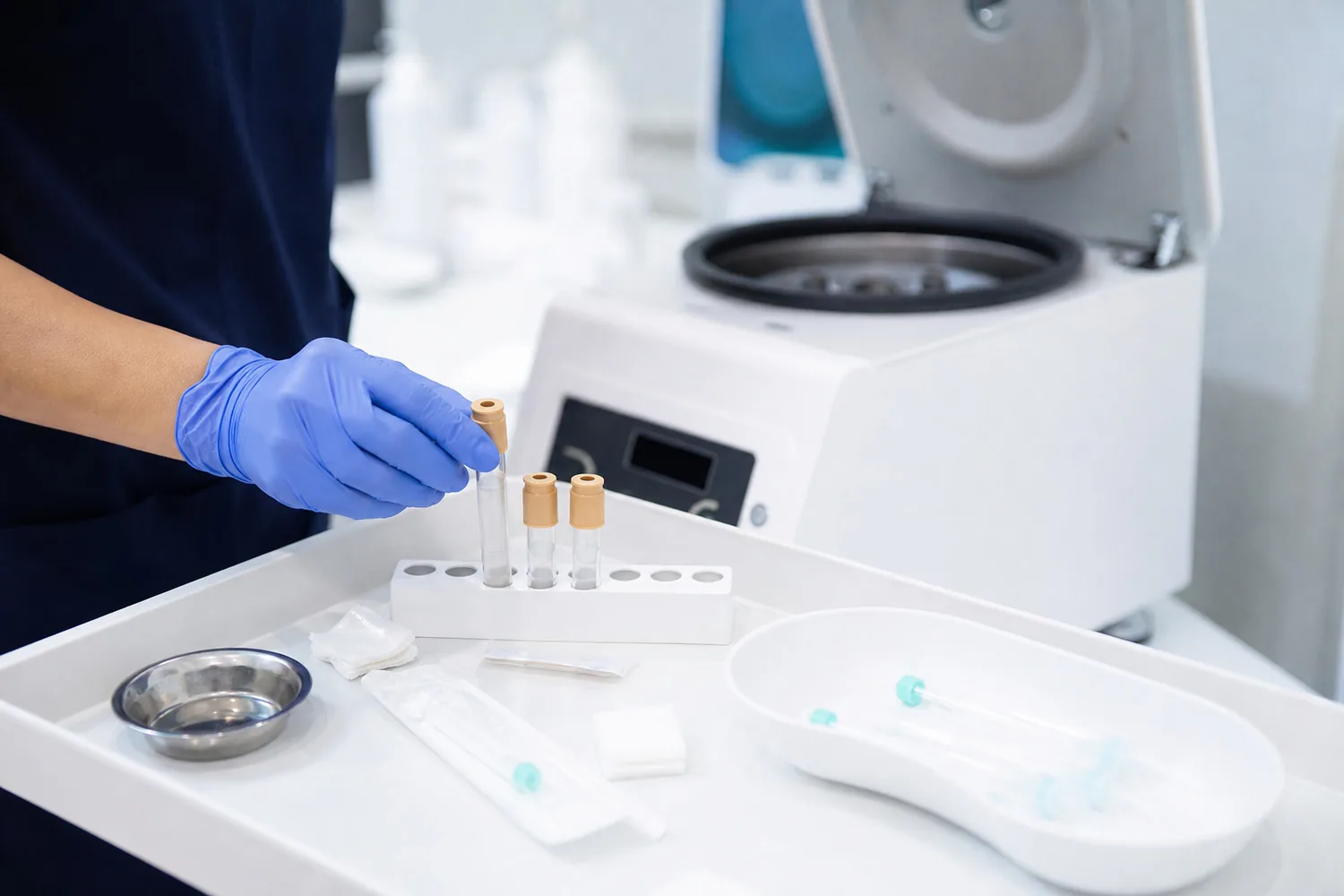
2. Centrifuge processing. The blood sample is placed in a centrifuge — a machine that spins it at high speed to separate its components. This isolates the platelet-rich plasma: the part of your blood that contains the highest concentration of growth factors.
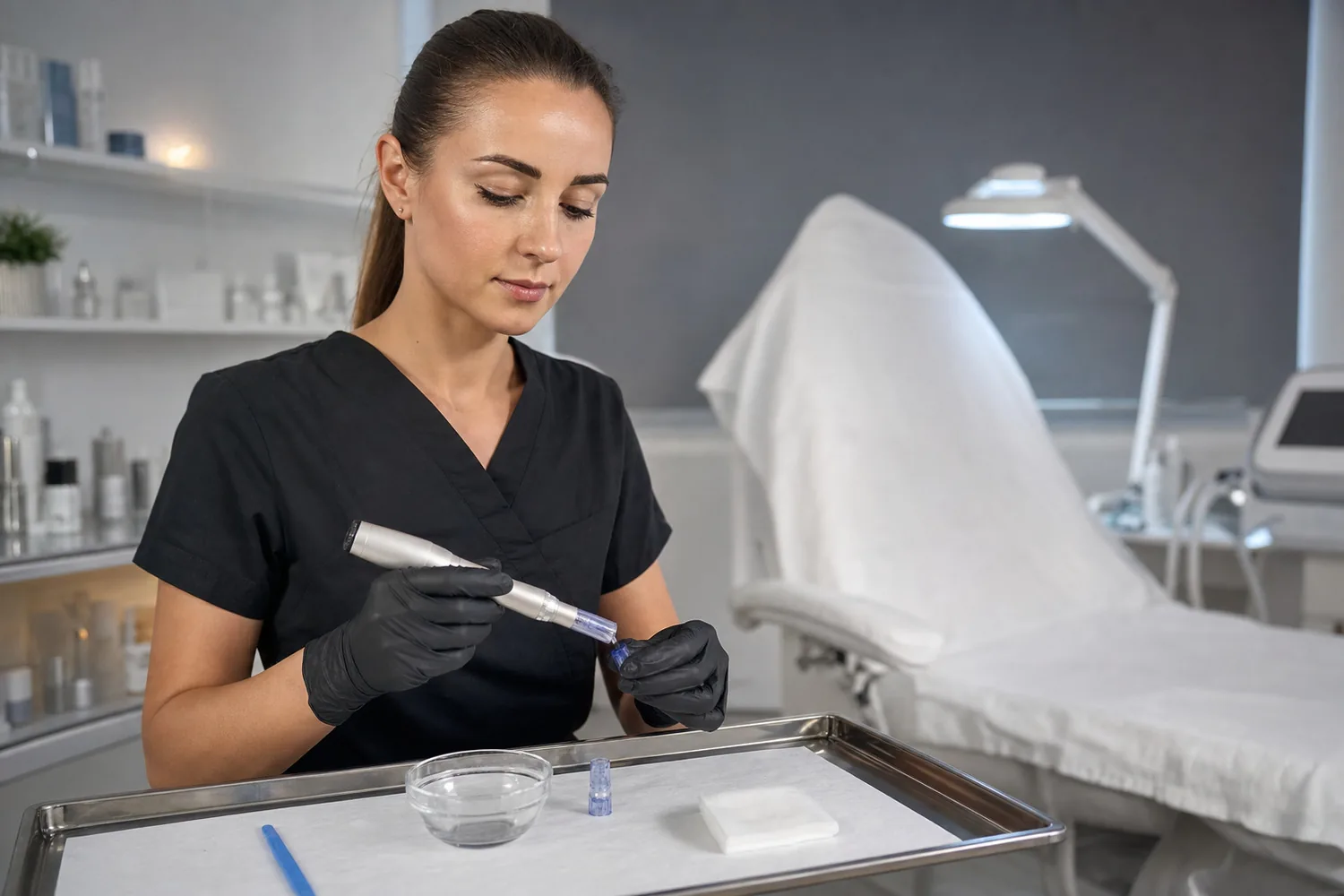
3. Application. The concentrated plasma is applied to the treatment area. In most cases, this is done using microneedling — tiny needles create channels in the skin that allow the plasma to penetrate deeply. For some clients, the plasma is injected directly.
The full session takes around 45 minutes from start to finish.
Platelets are best known for their role in wound healing — when you cut yourself, platelets rush to the site and release growth factors that trigger the repair process. PRP concentrates these growth factors and delivers them precisely to where you want to trigger that renewal response.
In the skin, this translates to:
For scalp applications, the same process is used to stimulate dormant hair follicles — making PRP a recognised option for early-stage hair thinning and pattern loss.
Results develop gradually. This is collagen remodelling, not an instant glow. Most clients notice improvement in skin texture and brightness from around two to three weeks after a session, with the full benefit developing over approximately three months. Results vary between individuals and are not guaranteed.
Because PRP uses your own blood — not a foreign substance or synthetic ingredient — the risk of allergic reaction is very low. The main side effects are those associated with any injection-based procedure: mild redness, minor bruising, or temporary swelling at the treatment site, typically settling within 24–48 hours.
PRP is not suitable for everyone. Certain medications, blood disorders, pregnancy, or active infections may affect suitability — which is why a consultation and medical history review comes before any blood draw at myskiin.
At myskiin, the blood draw is performed by a blood-draw qualified practitioner with venepuncture training. This is not standard at every clinic that offers PRP — it’s worth asking before you book anywhere.
PRP tends to suit clients who:
It is not an instant-result treatment. Clients who are looking for a same-day visible change are often better suited to HydroFacial O2 or a similar treatment first.
The free consultation is the right place to start. We review your skin, discuss your goals, and tell you honestly whether PRP, microneedling, or a combination approach makes more sense for your specific concern.
19 Lichfield Street, Walsall, WS1 1UG · Open every day, 10am–7pm · 01922 929850