Skincare products have limits with structural scars. Here’s an honest guide to scar types, why topical products can’t fix them, and what clinical treatments can realistically achieve.
Acne scars are one of the most-searched skin concerns in the UK — and one of the most misunderstood. Skincare products can do a great deal for overall skin health and pigmentation. But for structural scarring, the problem is beneath the surface.
Vitamin C, retinol, and AHAs can improve PIH and general skin tone over time. But for structural scars, the damage is in the dermis — topical products simply cannot penetrate deep enough. Clinical treatments create a controlled stimulus that triggers the skin’s own repair process at depth, encouraging new collagen production in the scarred area.
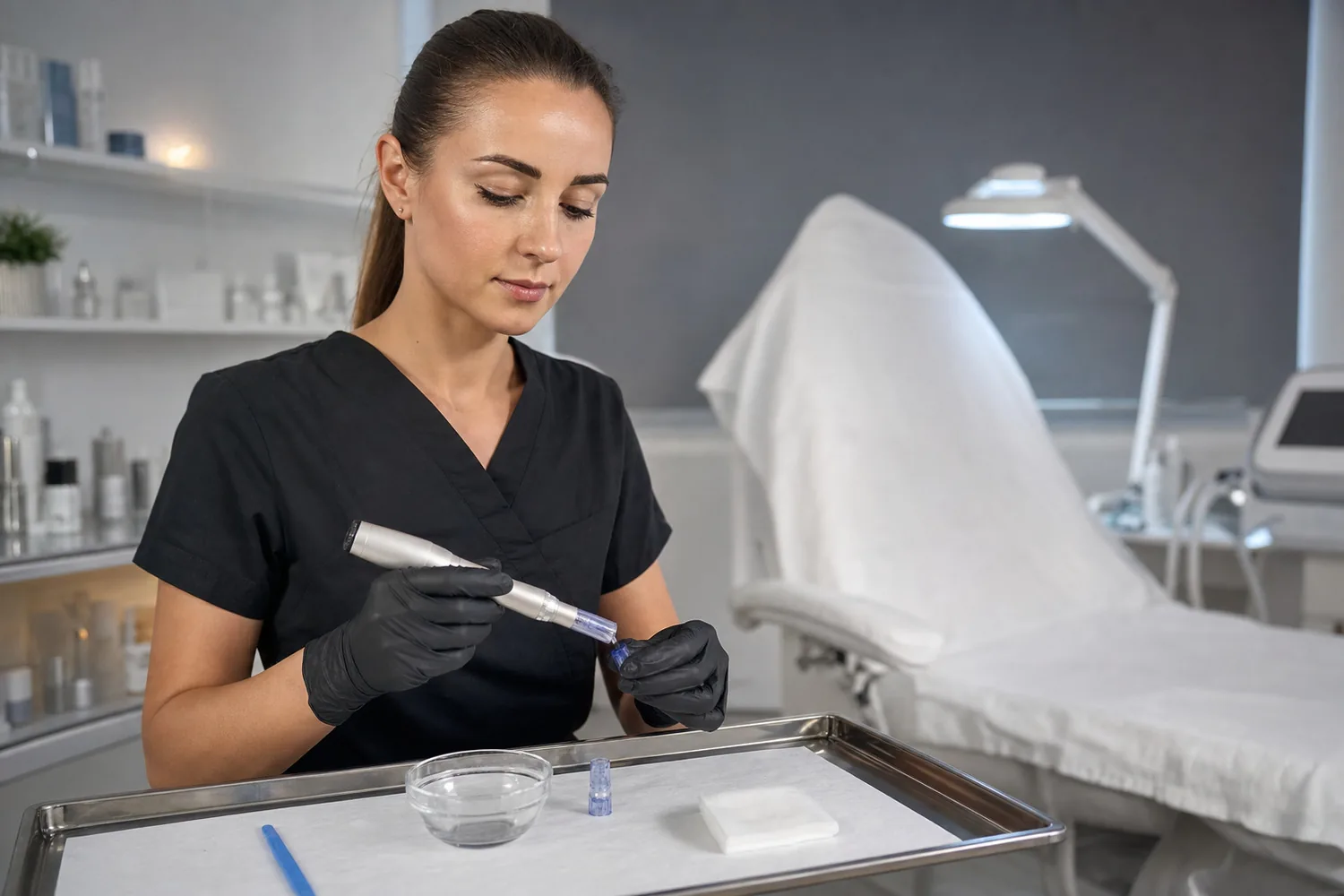
Microneedling (collagen induction therapy) uses a fine-needle cartridge to create thousands of micro-channels in the skin, triggering the skin’s wound-healing response — producing new collagen at the treated sites. Rolling and boxcar scars tend to respond well. Results build over a course of three to six sessions, spaced four to six weeks apart. Numbing cream is applied before treatment.
RF microneedling adds radiofrequency energy at depth through the needle tips — stronger collagen remodelling, particularly suited to more significant scarring. myskiin offers both; we advise on the right approach at your consultation.
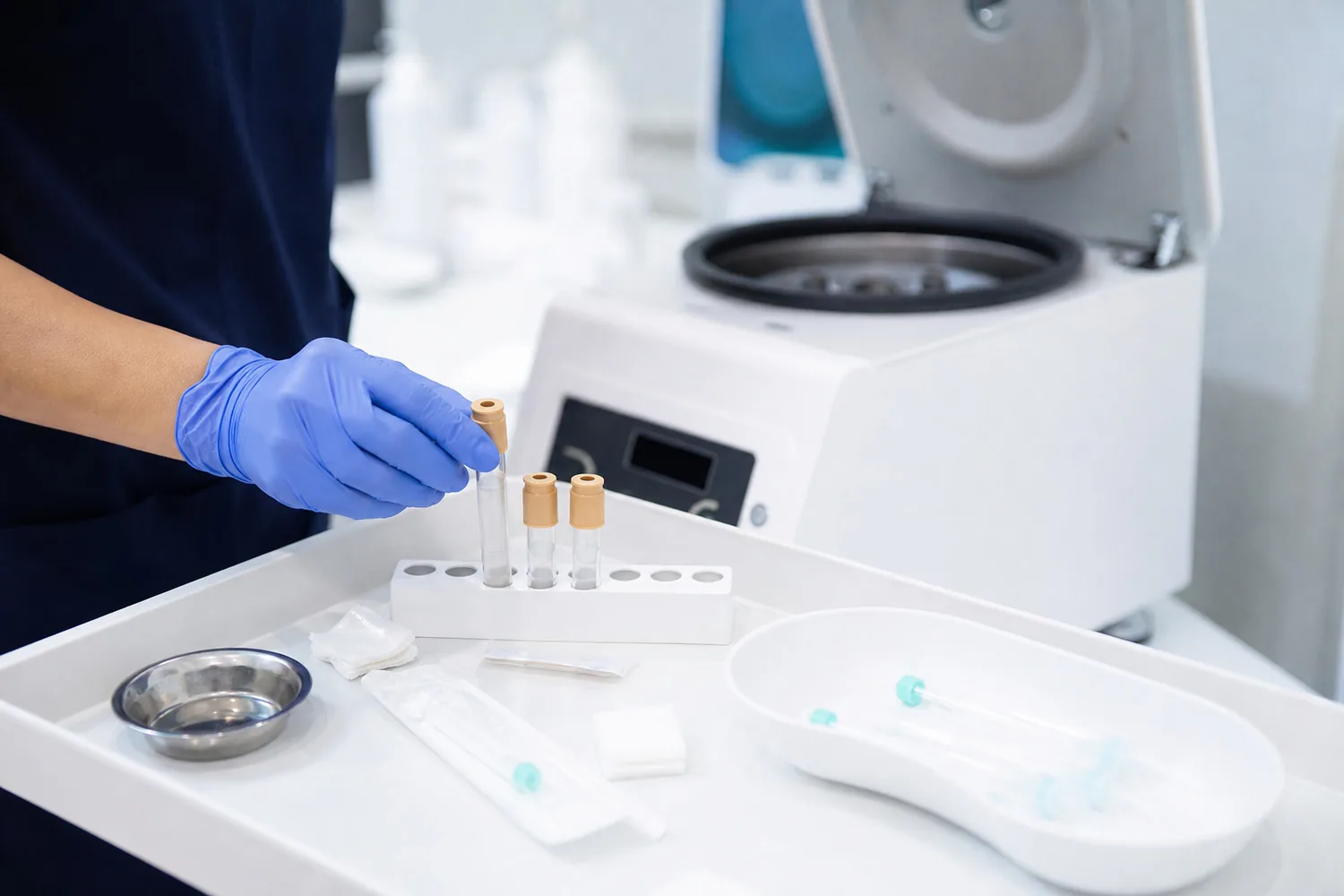
PRP can be combined with microneedling for enhanced results. Your own platelet-rich plasma — drawn from a small blood sample and centrifuged — is applied to freshly needled skin, delivering growth factors directly into the treated channels.
Honest expectations: Acne scarring does not disappear after one session. A course is needed and results develop over months. Ice pick scars may not fully resolve with any non-surgical approach. We will tell you honestly at consultation what is and isn’t achievable for your specific concern.
19 Lichfield Street, Walsall, WS1 1UG · Open every day, 10am–7pm · 01922 929850