Both use light to reduce hair. But they work differently — and the difference significantly affects who each can treat safely. Here’s the honest comparison.
Laser and IPL (Intense Pulsed Light) are sometimes used interchangeably in hair removal marketing. They’re not the same thing, and understanding the difference helps you make a more informed choice.
IPL devices emit a broad spectrum of light across a range of wavelengths. Because the light is broad-spectrum and scattered, a proportion reaches the hair follicle — but some is absorbed by the skin itself. With more melanin in darker skin, there’s more risk of the scattered energy causing burns or pigmentation changes. This is the primary reason IPL has historically been limited for darker skin tones.
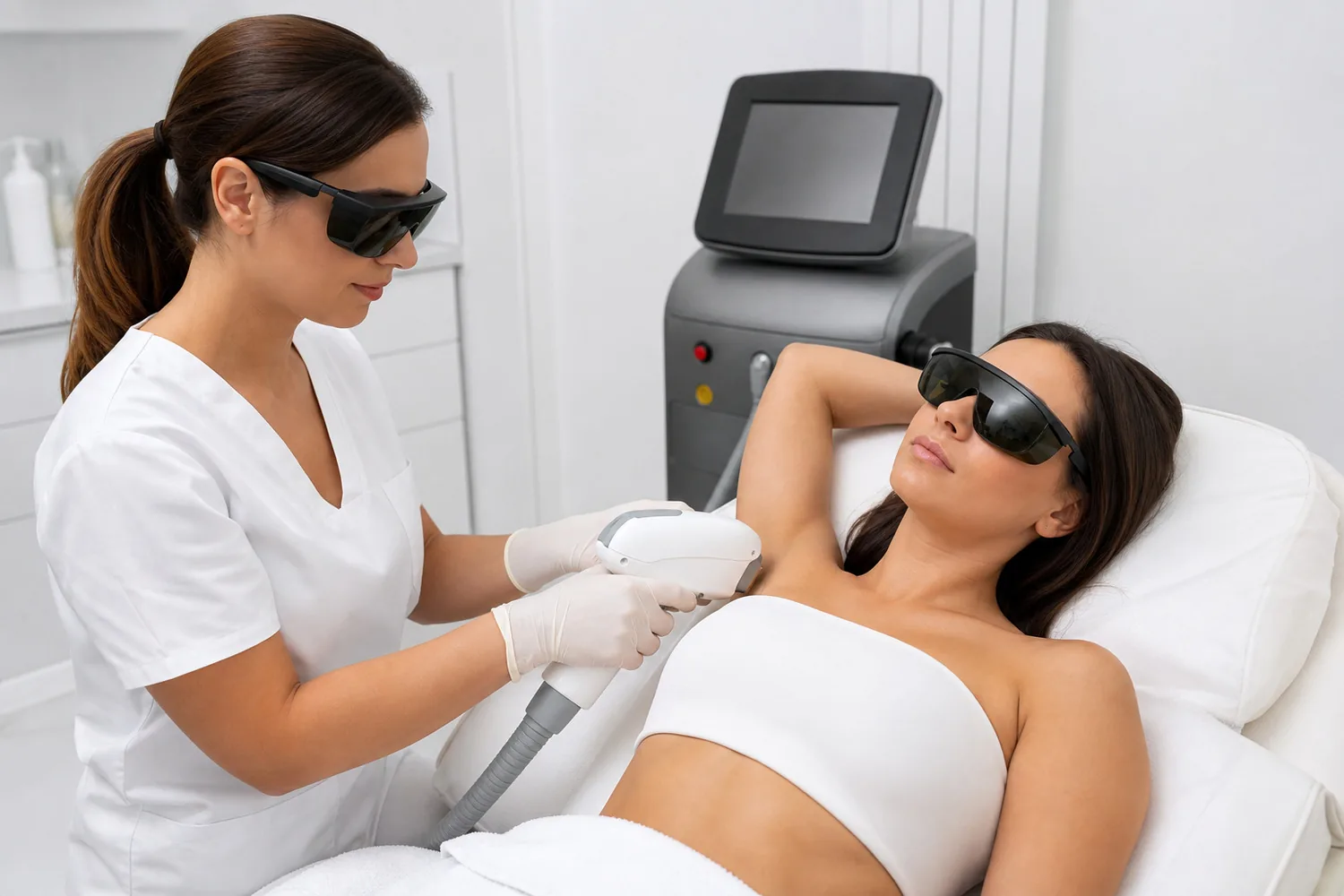
Laser devices emit a single, concentrated wavelength of light. This allows energy to be directed more precisely at the hair follicle with less scatter to surrounding tissue. Modern clinical laser systems also use gradual heating and integrated cooling to protect surrounding skin while delivering effective energy to the follicle — enabling safe treatment across a wider range of skin tones.
| IPL | Clinical laser | |
|---|---|---|
| Light type | Broad-spectrum, scattered | Single wavelength, concentrated |
| Precision | Lower | Higher |
| Skin tone range | Best for lighter skin | Wide range incl. darker skin |
| Availability | Salons, at-home devices, some clinics | Professional clinics |
The West Midlands has a large population of South Asian, Black, and mixed-heritage clients — for whom IPL’s limitations on darker skin are a real practical issue. If you’ve been told laser isn’t suitable for your skin type, it’s worth asking whether the clinic uses a clinical laser or IPL. Modern clinical lasers can treat a much wider skin-tone range than IPL.
At myskiin, we use a professional clinical laser, not a salon IPL device. All clients have a patch test before their first session.
19 Lichfield Street, Walsall, WS1 1UG · Open every day, 10am–7pm · 01922 929850