No, it doesn’t. Here is the anatomy behind why, and what dermaplaning is actually doing to your skin.
No, it doesn’t. That’s the short answer, and it’s worth explaining why, because the myth is the main reason people talk themselves out of a treatment that’s otherwise low-risk and easy to fit into a routine.
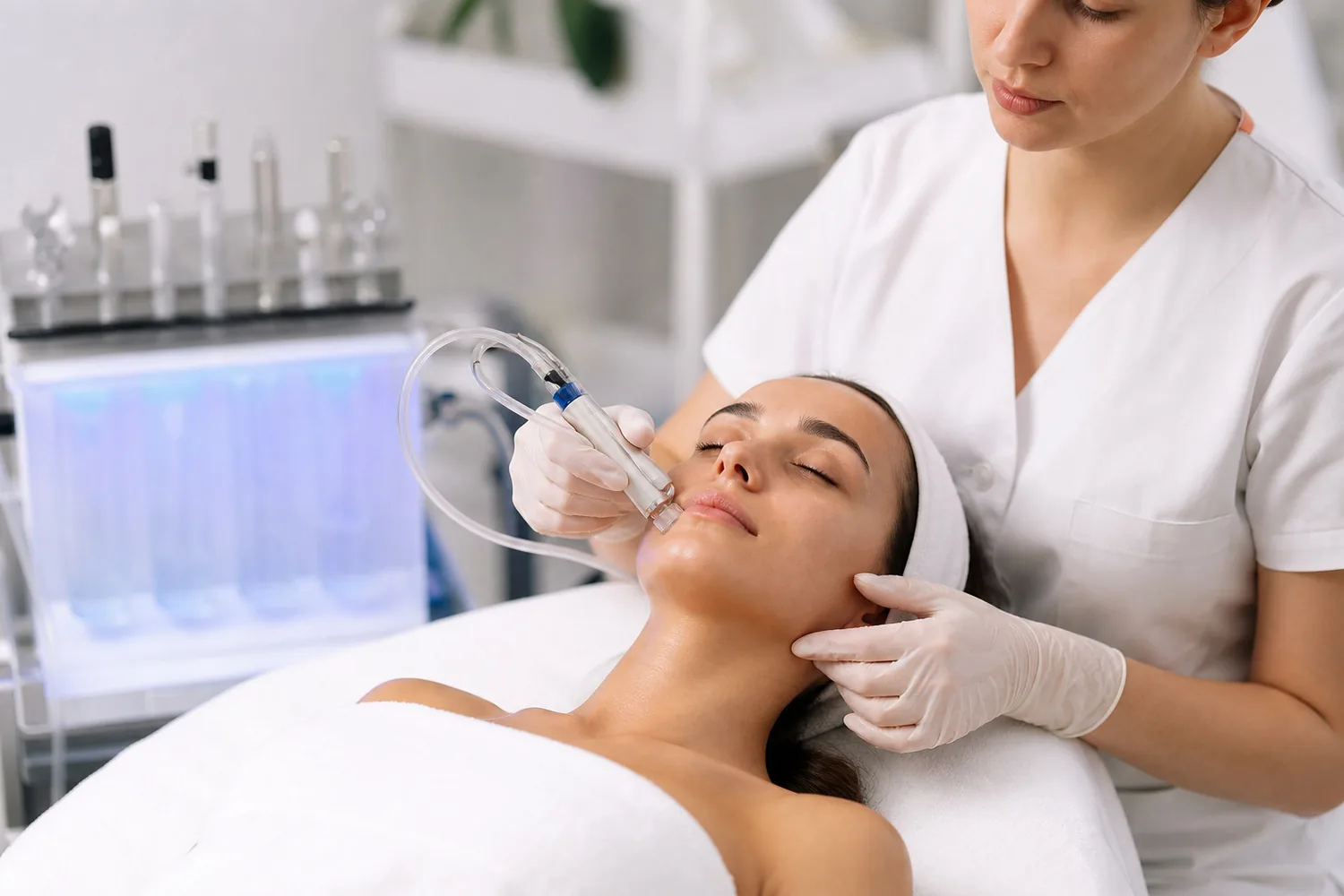
Dermaplaning uses a sterile surgical blade, held at a shallow angle, to gently remove the top layer of dead skin cells along with the fine, fair hair on the face known as vellus hair, or "peach fuzz". Cutting hair near the skin’s surface can make the tip feel blunt for a day or two, which is often mistaken for the hair coming back thicker. It’s the same illusion people notice after shaving a leg. The hair hasn’t changed. It just feels different where the blade cut it.
Hair thickness, colour and growth rate are set by the follicle under the skin, not by anything that happens at the surface. Vellus hair follicles are structurally different from the follicles that grow thicker terminal hair, and cutting a hair above the skin doesn’t reach the follicle at all. So there’s no mechanism by which a surface treatment like dermaplaning could switch a fine vellus hair into a coarser one. Whatever grows back after dermaplaning is the same hair, growing at the same rate it always did.
This is well established in the aesthetic literature and it’s one of the more confidently answerable questions in skincare. If your hair seems different after a session, it’s the blunt-tip effect settling down over the following days, not a change in the hair itself.
Worth knowing: a blade cuts hair above the skin, and the follicle that decides how thick and how dark that hair is sits below it. Nothing done at the surface reaches it, which is why the regrowth myth has no mechanism behind it.
While it removes vellus hair as a side effect, that’s not really the point of the treatment. Dermaplaning is a form of physical exfoliation. It lifts away the outer layer of dead skin cells, which is what tends to leave skin feeling smoother and looking a bit brighter afterwards. Removing that layer also means serums and moisturisers you apply afterwards can absorb more easily, which is why some clients like to book it before a facial or ahead of an event.
It’s not the right choice for everyone. We wouldn’t recommend it over active acne, rosacea, eczema in the treatment area, or if you’re currently on isotretinoin, because the blade needs calm, settled skin to work safely. Your practitioner will check for any of this before going ahead.
Fair question, and the honest answer is that a home dermaplaning tool and a clinic treatment aren’t doing quite the same job. In clinic, we’re using a single-use surgical blade at a controlled angle, on skin that’s been assessed first, with a technique that’s designed to exfoliate evenly across the whole face without missing patches or catching the skin. A home tool can still nick or irritate the skin if the angle or pressure is off, and it’s easy to go over the same area too many times, which can leave skin more reactive rather than smoother. The results people are often chasing when they buy a home blade, that even, brightened finish, tend to come from the exfoliation being done properly and consistently, not just from having a blade in the house.
Dermaplaning suits most skin types because there’s no heat and no chemical peel involved, so it’s generally a comfortable option even for skin that reacts easily to other treatments. It works well as a stand-alone glow-up before an occasion, or as regular maintenance roughly once a month, in step with the skin’s natural renewal cycle. It also pairs well as a prep step before treatments like our HydroFacial, since freshly exfoliated skin tends to take up hydration and active ingredients more readily.
If the regrowth myth was the only thing holding you back, that’s one less reason to hesitate. Whether it’s actually right for your skin, given your history and any sensitivities, is worth talking through properly rather than guessing. You can read more on our dermaplaning page or book a free consultation and we’ll take a look at your skin in person first.
19 Lichfield Street, Walsall, WS1 1UG · Open every day, 10am–7pm · 01922 929850